Following Four Paws: A Hike Through the Woods – Multimedia story
Introduction
Sometimes the best adventures are the simplest ones. For my multimedia story, I documented a hike that I went on with my friend, her dog, and my dog. What started as a casual day outdoors turned into an opportunity to capture the excitement, curiosity, and companionship that made the experience memorable. Through text, photographs, videos, and audio, I wanted to tell the story from the moment we started getting ready until we returned to the trailhead.
Getting Ready
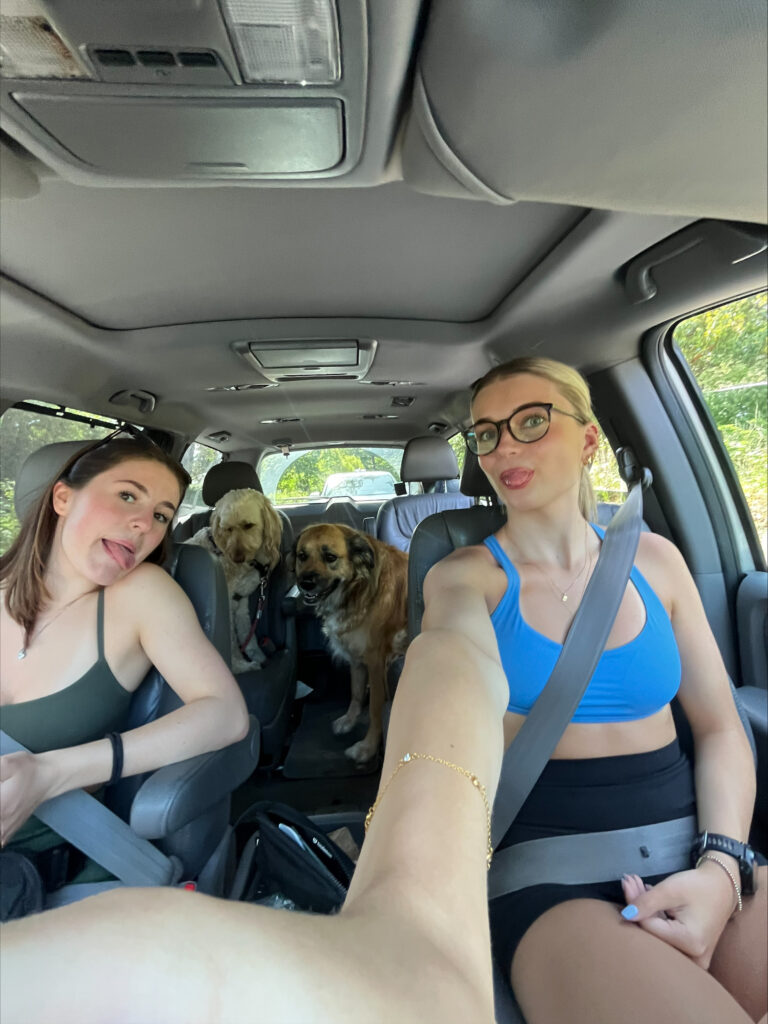
The adventure started around 9:00 AM when I picked up my friend and her dog. Before leaving, we packed the essentials for the hike, including water bottles, dog treats, poop bags, snacks, and a few extra layers in case the weather changed.
As soon as the dogs realized we were going somewhere, they were excited and ready to go. Their tails were wagging nonstop as we loaded everything into the car. Even before we arrived at the trail, their energy set the tone for the day.
Arriving at the Trail
After a short drive, we arrived at the trailhead and got everything ready before starting our hike. The dogs were eager to begin exploring and could barely stand still while we adjusted their leashes and grabbed our water bottles.
Before setting off, we took a moment to take in our surroundings. The forest was quiet, and the air was fresh. We were ready for some fun!
Following the Trail
As we made our way through the forest, the dogs led the way. They stopped to investigate every interesting smell, raced ahead on the path, and occasionally checked back to make sure we were still following them. Watching them explore reminded me how much there is to notice when we slow down and pay attention to our surroundings.
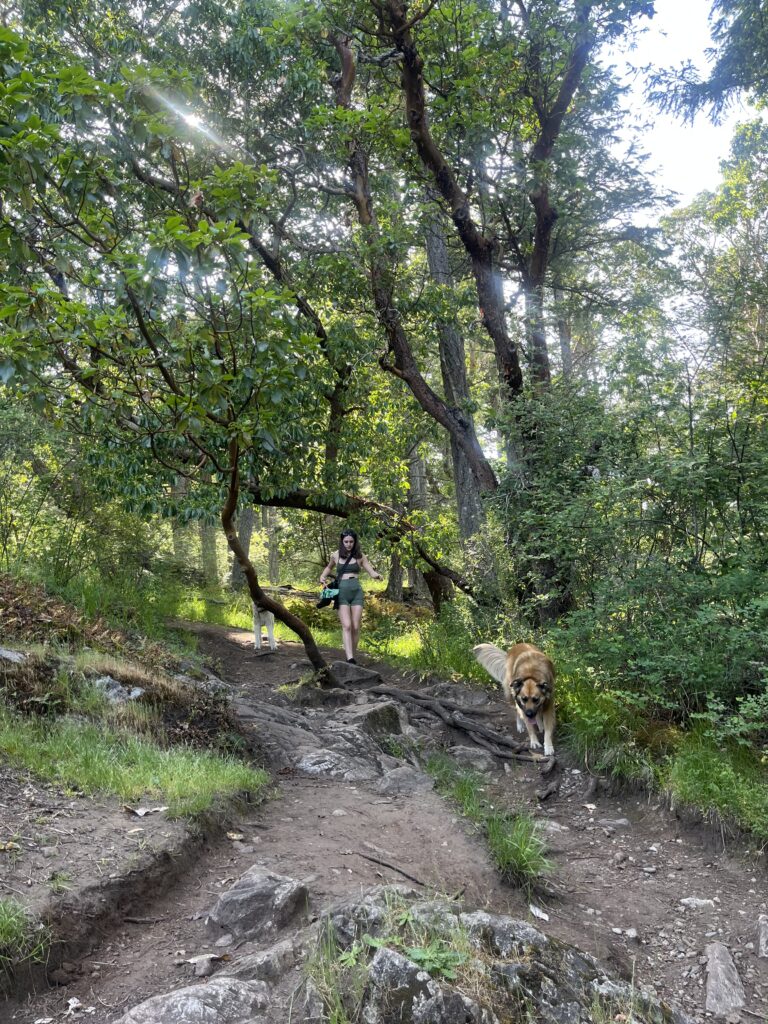
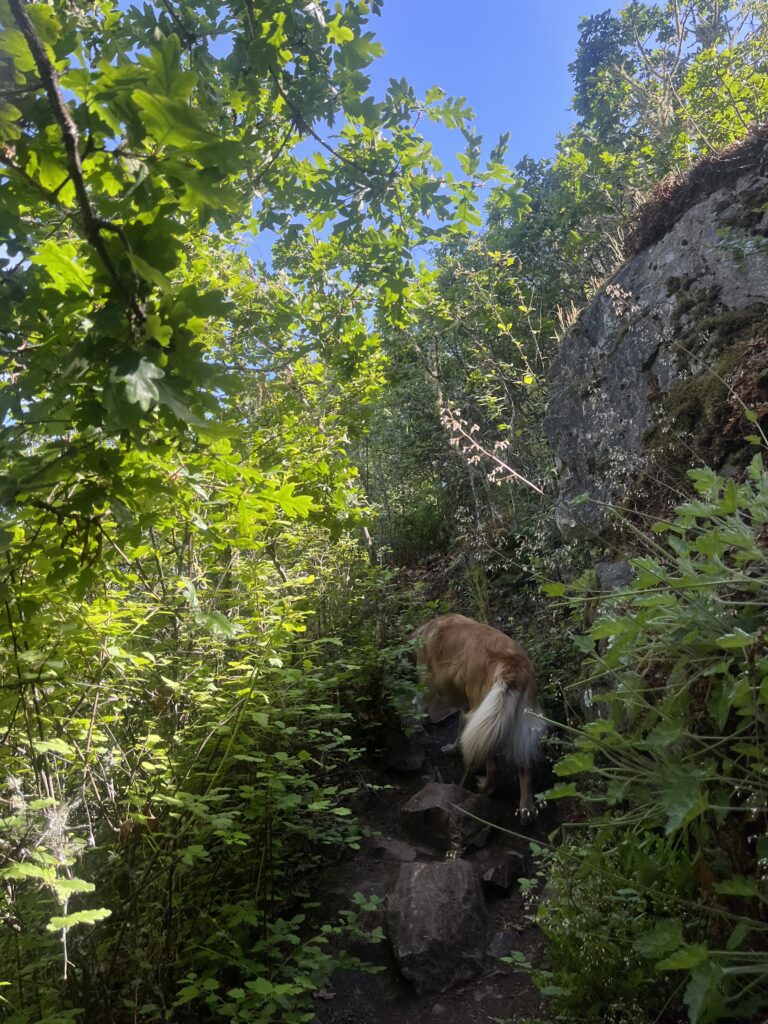
There were a few times when the dogs became completely focused on a particular smell and refused to move until they had thoroughly investigated it. Other times they would suddenly burst forward with energy like as if they had seen something exciting further down the trail. Their curiosity and energy added to the whole experience.
We moved through tall trees and climbed steep rocky sections, with birds chirping overhead and the occasional sound of leaves crunching beneath our feet. Every so often, we would stop to take photos, drink some water, and let the dogs explore a little more before continuing.
The photographs highlight details that would be difficult to communicate through text alone. Each image captures a different part of the environment and helps tell the story visually.
The Best Moments
One of my favourite parts of the hike was simply watching the dogs interact with the environment and with each other. They seemed completely immersed in the experience, whether they were running down the trail, exploring a new area, or stopping to observe something that caught their attention.
We stopped for a short break at the top to have a snack, drink some water, and let the dogs rest. Sitting quietly for a few minutes gave us the opportunity to appreciate the sounds around us and take in the peaceful atmosphere of the forest.
This video captures movement and energy in a way that photographs cannot. It allows viewers to experience some of the excitement that made the hike enjoyable.
Taking It All In
As the hike continued, we spent time appreciating the scenery around us. Being outdoors provided a break from screens, assignments, and daily routines. The trail offered a chance to slow down and focus on the present moment.
One of the things I enjoyed most about the hike was how calm everything felt. There were no deadlines, no distractions, and nowhere we needed to be. We spent most of our time outside this day, which was nice because lately I’ve been glued to my computer and school
Heading Back
Eventually, we made our way back toward the trailhead. The dogs were noticeably more tired than when we had started, but they still seemed happy after spending the afternoon exploring. Although the hike itself was not particularly long or difficult, it felt rewarding because of the experience we shared.
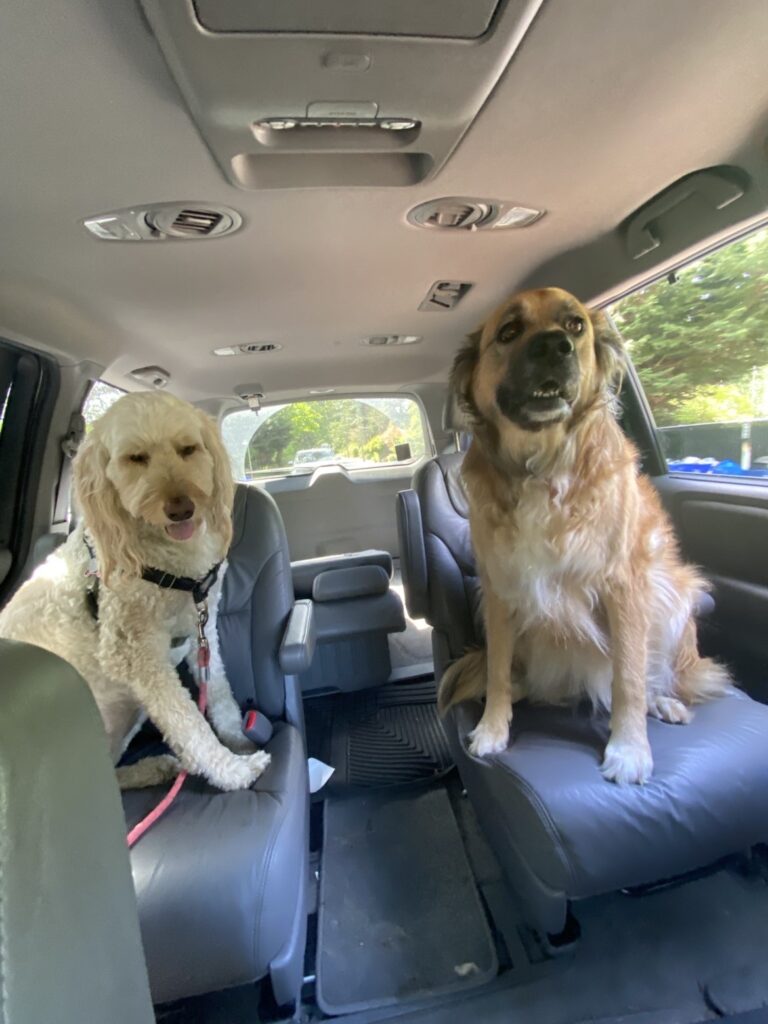
This image provides a visual conclusion to the story and shows the contrast between the dogs’ energy at the beginning and end of the hike.
Reflection
Creating this multimedia story helped me think more carefully about how different forms of media contribute to storytelling. While writing the story provided context and structure, the photos, videos, and audio captured details that words alone could not fully communicate. I will say that I did find it challenging to balance documenting the experience with enjoying myself during the hike. Unfortunately, taking pictures during this adventure was a bit of a chore for me. However, I was still able to stay present in the moment and have fun
This project taught me that a good story isn’t always about choosing as many media elements as possible. Instead, it is about choosing media that holds a purpose, enhances the story, and gives learners a greater understanding of the experience.
Applying Mayer’s Principles of Multimedia Learning
Coherence Principle
My story follows the coherence principle because I only used media (Images, video, and audio) that were relevant to my story. For example, I didn’t use a photo or video showing my outfit, because it wouldn’t have added anything important to the story, and maybe would have even been distracting.
Signaling Principle
The story is divided into sections with bold headings such as “Getting Ready,” “Following the Trail,” and “Heading Back.” These headings help readers through the adventure and make the structure of the story clear.
Spatial Contiguity Principle
Every time I included media, I placed it directly beside or below the text that it was related to. This is important because the people who are reading my story, won’t have to search for photos or information on the page.
Segmenting Principle
Instead of writing about my hike in one big paragraph, I broke the stroy down into smaller sections. This makes the content easier to follow and allows readers to process one part of the experience at a time because it is preventing cognitive overload and matching our human capacity.